
If anxiety is making everyday tasks feel overwhelming and you’re unsure where to turn, this article on how to find a therapist for anxiety will help guide you towards relief.
It’s not lost on me that when you’re anxious enough to want a therapist, the prospect of finding one feels overwhelming.
In this article, I’ll walk you through:
- How to find a therapist for anxiety that’s a good fit for you,
- where to find them,
- navigating insurance and payment,
- and even what to ask in your first consultation.
Anxiety affects so many areas of life—whether it’s making social interactions stressful or leaving you constantly on edge in daily situations. Working with a therapist who understands anxiety can provide you with the support and tools you need to overcome the thoughts and fears that hold you back.
1. Goodness of Fit: The Foundation of Effective Therapy
When it comes to therapy, finding a therapist who feels like the right fit is crucial. But what does “goodness of fit” mean exactly? It refers to the quality of the connection between you and your therapist. This is different than just liking them; it’s about feeling comfortable, heard, and understood in a way that helps you feel safe enough to explore your thoughts and feelings.
Therapy is deeply personal, and anxiety can be deeply rooted in how we feel about ourselves and the world. So, working with someone who “gets you” can make all the difference.
Here are a few things to consider when figuring out how to find a therapist for anxiety who is a good fit:
- Communication style: Do you prefer a therapist who is direct or more nurturing?
- Cultural understanding: Is it important that your therapist understands your background or lifestyle?
- Approach to treatment: Do you want someone who focuses on practical coping strategies, or are you looking to dive deep into the root causes of your anxiety?
It’s a great idea to talk to a few therapists to see who feels like the best fit. Many therapists, myself included, offer free consultations for this purpose. In the free 15-minute phone consultations that I offer, for example, potential clients get a feel for me and my interaction style, and I get an idea of what kind of help they are looking for.
2. Where to Find Potential Therapists
People You Know
Before the internet (yes, I remember “those days”!), a typical way to find a therapist was to get names from your doctor, a family member, or a friend. This approach can still be effective, but it is often less efficient than searching online.
Don’t dismiss the possibility that someone you know might have a suggestion that is tailor-made for you. But if your panic attacks are telling you that you don’t have time to wait, looking online will probably be a faster way to generate a list of possible therapists.
Therapy Directories
Therapist directories are one of the most helpful tools when searching for a therapist for anxiety. These directories allow you to search for mental health professionals based on location, specialization, and more.
Here are a few popular, reputable therapist directories to consider:
- Psychology Today: One of the largest therapist directories, where you can filter by issues like anxiety, types of therapy offered, and insurance accepted. However, this directory can be overwhelming because it’s vast.
- TherapyDen: A more inclusive directory with a focus on diversity and mental health professionals who provide services tailored to different populations and concerns. This one is my personal favorite.
- GoodTherapy: Another extensive directory that allows you to search by location, type of therapy, and specific issues like anxiety and phobias.
These directories provide bios, photos, and links to the therapist’s website. Use this information to get a feel for their experience and whether they might be a good fit for you.
Online Therapy Increases Your Options
Therapy is no longer limited to in-person sessions. Virtual therapy has become an increasingly popular and effective way to receive treatment. In fact, it is the only way I do therapy currently.
If you have a busy schedule or prefer the comfort of your own home, online therapy may be the right option for you. What’s more, it increases the pool of therapists from which you can choose.
For example, if you live in a small town or rural area, you may wonder how to find a therapist for anxiety within any reasonable distance. Seeing a therapist online solves that problem, saving you the time and expense of commuting far for treatment.
Virtual therapy sessions are incredibly common these days. If it’s not clear on a therapist’s website whether they offer online therapy, just ask them. Also, most insurance plans cover online therapy, though you should check your coverage to confirm.
In therapist directories like the ones listed above, therapists from outside your geographical region are likely to show up in your search. This may seem confusing at first. But therapists who live far from you often provide online therapy in other cities and states. For example, I can provide online therapy in 40 U.S. states, due to a PSYPACT credential for psychologists.

Google “How to find a therapist for anxiety near me”
You heard it here first. Well, maybe not. But, don’t leave a good Google search off your list of strategies for how to find a therapist for anxiety. Not all therapists list themselves in therapist directories. And the search features of each directory’s algorithm means that you might miss some therapists who are otherwise well-suited for you.
In other words, Google search results can turn up some folks you would have otherwise missed. Don’t stick to the first page of results, either. There are many therapists out there; chances are slim that the therapist with the exact combinations of qualities you’re looking for will be on the first page of search results. Don’t be afraid to dig deep!
Dive in, and make a list of possible therapists based on your research.
4. Read Their Websites to Get a Feel for Them
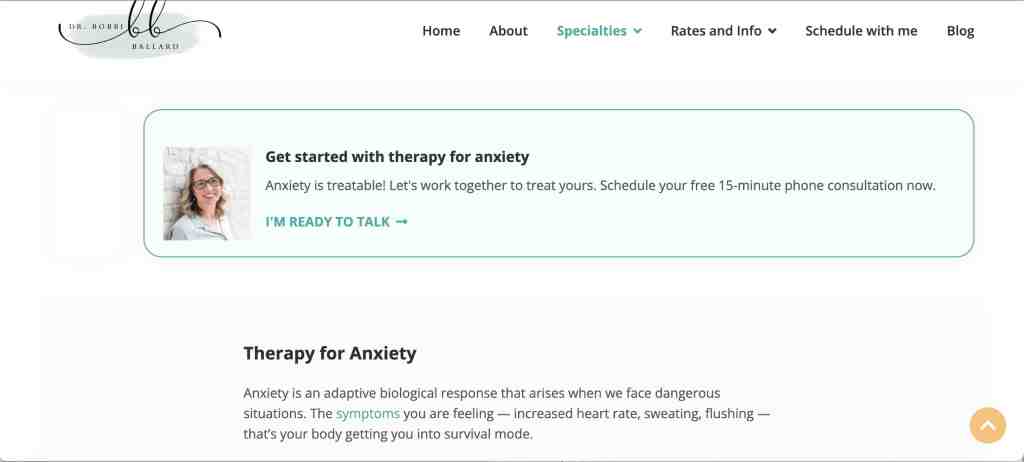
OK, so you likely have compiled a list of potential therapists at this point. Good job! It’s time to check out some websites. A therapist’s website is often the first point of contact. It can offer a lot of insight into their style, expertise, and approach to treatment.
Here are a few things to look for:
- Specialization: Does the therapist specifically mention anxiety treatment? Do they list the types of anxiety disorders they treat, like phobias, social anxiety, or panic disorder?
- Tone of the website: How does the website make you feel? Is the tone reassuring, compassionate, and professional? This can give you a sense of how the therapist might interact with you in sessions.
- Feeling seen and understood: Does the therapist and their website speak to you? When you read about who they help, does it feel like they’re talking to you?
- Approach and modalities: Many therapists will list the therapeutic approaches they use. Reading about their methods can help you decide if their approach aligns with what you’re looking for.
Paying attention to these details can help you decide if you feel connected to a potential therapist even before you speak with them.
5. Consider Your Insurance and Finances
(Note: this section is for residents of the U.S., and I am not sure how it applies in other countries’ healthcare systems.)
Cost is likely an important consideration when you’re figuring out how to find a therapist for anxiety.
Your insurance provider’s list of in-network therapists can guide you in how to find a therapist for anxiety
If you have insurance that you plan to use for therapy, it’s important to understand your coverage before diving too deep into your search. Therapy can be an investment, and knowing what your benefits will cover upfront can help you avoid unexpected costs.
Most insurance companies have online directories of in-network providers, making it easier to find a therapist whose services will be covered at a higher rate. You may want to cross-reference your list of possible therapists from your own search with list of in-network providers on your insurance company’s website.
However, therapists are significantly more likely to be out of network compared to other healthcare providers. Many therapists, including myself, choose not accept insurance due to the administrative burdens and low reimbursement rates from insurance companies. Therefore, the list of in-network therapists may be short, and/or these therapists’ caseloads may be full.
But don’t despair!
Did you know that your insurance may cover a portion of your therapy bill, even if your therapist is not a provider with your insurance company?
To find out, contact your insurance provider, and ask them the following questions:
- Do I have out-of-network mental health benefits?
- Do I have a deductible? If so, how much of it is already met?
- What is the reimbursement fee or rate for outpatient mental health office visits? (If they ask for CPT codes, give them 90834 and 90837.)
- Do I have a limit on how many sessions I can have in a year?
Armed with this information, you can determine your out-of-pocket costs for therapy.
Seeing an out-of-network therapist is straightforward. You typically pay for sessions at the time of service, after which your therapist provides you with a detailed receipt (called a “superbill”). You submit the superbill to your insurance, and they reimburse you for the amount they cover. That’s it!
Out-of-network benefits allow you to see the therapist of your choice, regardless of whether they are contracted with your insurance company. This feature benefits you, because you may find a therapist you really connect with who is not in-network, yet you are still able to access some insurance benefits.
6. “Interview” a Few Therapists
You’re almost there. Have you narrowed down your list after looking at websites? Great! It’s time to set up consultations with a few therapists. These are typically on the phone, and sometimes by video.
Many therapists, myself included, offer a free, 15-minute phone consultation. This consultation is your opportunity to get a sense of a therapist’s style, ask questions about their experience with anxiety, and gauge how comfortable you feel with them.
Here are a few questions to ask during a consultation:
- What’s your experience treating anxiety? This helps ensure that the therapist has the specific expertise you need.
- What therapeutic approach(es) do you use? Understanding their approach will help you know if it aligns with your goals.
- What should I expect from a typical session? This question gives you a sense of the structure and what your sessions will look like.
Finding a therapist for anxiety is personal, and the first person you contact may not be a good fit—and that’s okay! We’re just people, and each of us is not the right therapist for everyone out there.
At the end of the consultation, you may decide to schedule an initial session. Or, you may want to sleep on it and continue talking to a couple other therapists before deciding. It’s all okay! I promise we are not taking it personally if you decide to work with someone else. We therapists are helpers, and we want you to get the best help you can.
Take Your Time, It’s Worth the Effort
It’s a cruel irony: when you’re anxious enough to want a therapist, the prospect of finding one can feel too overwhelming. My hope is that this article guides you in how to find a therapist for anxiety, so that you can get the help that you need.
It really is worth taking the time to find someone who truly understands you and your needs. The key is working with a therapist who feels like a good fit for you and who specializes in helping people with anxiety. The process may take time, but when you find the right therapist, you’ll be taking an important step toward managing your anxiety and improving your overall well-being.
Anxiety is highly treatable, so putting yourself out there and starting therapy can make all the difference in your life.
How I Can Help
If you are reading this and wondering if we might be a good fit to work together, I encourage you to reach out to me. If I’m not available to be your therapist, I can provide you with appropriate resources so that you can find the help you are looking for.
I am authorized to see clients in online therapy in 40 states, and I have helped people with anxiety for over 20 years. Thanks, and be well!

1 reply on “How to Find a Therapist for Anxiety”
[…] Scheduling regular check-ins with a therapist or counselor. If you’re not sure where to start in finding a therapist, you may find this article I wrote on… […]